Search “CNC machinist job description” and you’ll get a dozen fill-in-the-blank templates from job boards and hiring software.
If your postings are filling up with the wrong applicants, the problem was never a missing template — it’s that a template can’t tell a Mazak Integrex programmer with .0002″ tolerance experience that a specific role is actually theirs.
That takes specifics no generic form field captures.
Titles Don’t Carry Enough Information on Their Own
“CNC Machinist” covers an enormous range: a Haas mill operator running a proven program, a 5-axis Mazak programmer building work from a blank print, a Swiss-type lathe specialist in medical components.
Three different skill sets, three different pay bands, three different candidate pools — and a posting that only says “CNC Machinist Wanted” filters none of them in or out.
The machinists you actually want — the ones with real programming depth or tight-tolerance experience — skim past vague postings, because nothing confirms the role matches what they do.
Meanwhile the posting fills up with applications from candidates whose experience doesn’t match, because there was nothing specific enough to screen them out either.
The distinction between operator, machinist, and programmer work matters on the employer side just as much as it does for candidates. See CNC Machinist vs. Operator vs. Programmer: What the Titles Actually Mean for Your Pay.
Build the Posting Around the Actual Work
Before writing it, get specific about five things:
Machine and Control
Brand — Mazak, Haas, Okuma.
Type — mill, lathe, mill-turn, Swiss-type.
Control — Fanuc, Siemens, proprietary.
This is the single most-searched term for machinists browsing job boards, and it’s what separates a qualified applicant from a curious one.
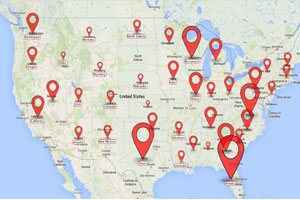
CNC Machinist Recruiter recruits across machine-specific specialties, including Mazak Mill Programmers, Mazak Integrex Operators, mill machinists, lathe machinists, and other CNC specialties.
Programming Expectation
Operator — running existing programs.
Setup operator — fixturing and offsets.
Programmer — building programs from prints.
And if programming, which CAM software — Mastercam, Fusion 360.
Conflating these roles in one vague posting is one of the most common reasons qualified programmers skip past operator-level postings and vice versa.
If the position truly requires programming responsibility, identify that clearly rather than relying on a generic “CNC Machinist” title. CNC Machinist Recruiter’s CNC Programmer recruiting specialty is built around that distinction.
Tolerance and Industry
Stated tolerance range and the industry context — aerospace, medical, automotive, general job shop — tell an experienced machinist immediately whether their background applies.
They also signal the caliber of work to candidates who specifically seek out tight-tolerance environments.
Shift and Environment
Shift pattern, overtime expectations, and shop environment.
Experienced machinists — particularly those choosing between several open postings — often decide based on this as much as on pay.
Pay Range
A real range measurably increases qualified applications.
Machinists compare postings the same way welders do; “competitive pay” reads as vague or below-market and costs you candidates who’d otherwise apply.
A Before-and-After CNC Job Posting Example
Before
“CNC Machinist needed for growing shop. Must have experience. Competitive pay and benefits.”
After
“CNC Programmer — Mazak Integrex 5-axis, Mastercam, tolerances to +/-.0005″ on aerospace components (AS9100). Day shift, occasional OT, $28–36/hr depending on experience. Skills test required before offer.”
The second version filters before a single resume arrives.
A machinist without 5-axis programming experience will self-select out; one with exactly that background will recognize the role as theirs immediately.
What to Shorten or Leave Out
Generic culture language — “team player,” “fast-paced environment,” “detail-oriented” — does little filtering work for machinist candidates and pushes the actual requirements further down the posting.
A short line is fine; three paragraphs of it buries the specifics that make the posting worth applying to.
Lead With the Specifics — Most Candidates Never Scroll Past the First Lines
Job boards commonly truncate postings after the first line or two.
If machine type, programming expectation, and tolerance range aren’t visible immediately, you lose the scanning advantage before a candidate ever clicks through.
Put the specifics first; put the company boilerplate after.
The Bottom Line
A job description’s job is to filter, not just broadcast.
The more specifically it names the machine, control, programming expectation, tolerance, and pay, the fewer unqualified applications you’ll sort through — and the faster a genuinely qualified machinist recognizes the posting as worth their time.
If writing and filtering job descriptions isn’t where you want to spend your time, post your CNC opening with us and we’ll build the search around the specific machine and tolerance work you need done, or speak with a CNC recruiter directly.