Not every CNC credential moves your pay the same amount. A NIMS Level I credential and a GD&T class are both worth having, but a shop looking for a 5-axis Mazak programmer and a shop looking for a manual lathe operator are screening for completely different proof of skill.
The credential that gets you noticed depends on which specialty you’re actually trying to get hired into — here’s how to match the two.
Why “Get Certified” Isn’t Specific Enough Advice
Most certification guides treat CNC machining as one job. It isn’t.
A mill operator, a lathe programmer, a tool and die maker, and a quality inspector all get evaluated against different standards, and a shop posting for one of those roles is searching for the credential that matches it, not a generic “certified machinist” claim.
The fastest way to waste testing money is earning a credential that’s a strong match for a specialty you’re not actually applying to.
The occupation overall isn’t growing fast — the Bureau of Labor Statistics projects machinist and tool and die maker employment roughly flat through 2035 — but it shows about 30,400 openings a year nationally, almost all from an aging workforce retiring out.
That combination means shops aren’t short on applicants; they’re short on applicants who can prove the specific skill an open role requires. A matched credential is what makes that proof fast.
NIMS: Match the Level and Specialty to the Role, Not Just the Brand Name
NIMS (the National Institute for Metalworking Skills) is the credentialing body shops actually recognize, but “NIMS certified” alone tells an employer less than which specific credential you hold.
NIMS Level I covers measurement, materials, and job planning — the foundation every other credential builds on. It’s the right first step regardless of which specialty you’re aiming for, but it’s not, by itself, what gets a programmer role noticed.
NIMS Level II, CNC Milling is what a shop screening for mill operators and mill programmers searches for specifically.
If you’re targeting roles like the ones under this site’s Mazak Mill Programmer or CNC Vertical Machinist specialties, this is the credential that maps directly to the posting.
NIMS Level II, CNC Turning is the lathe-side equivalent — the credential shops hiring for CNC Lathe Programmer or Mazak Integrex Operator roles are actually looking for.
A mill credential doesn’t substitute for it, even though both fall under “CNC machinist” broadly.
Grinding and specialty credentials exist for grinder operator and boring bar roles specifically.
These are lower-volume specialties with less competition among certified candidates, which can mean less competition for the job too.
Matching your next credential to the actual specialty you’re applying into — not just “a NIMS certification” in general — is the single highest-leverage decision in this list.
GD&T: The Skill That Separates “Operator” From “Machinist” on Paper and in Pay
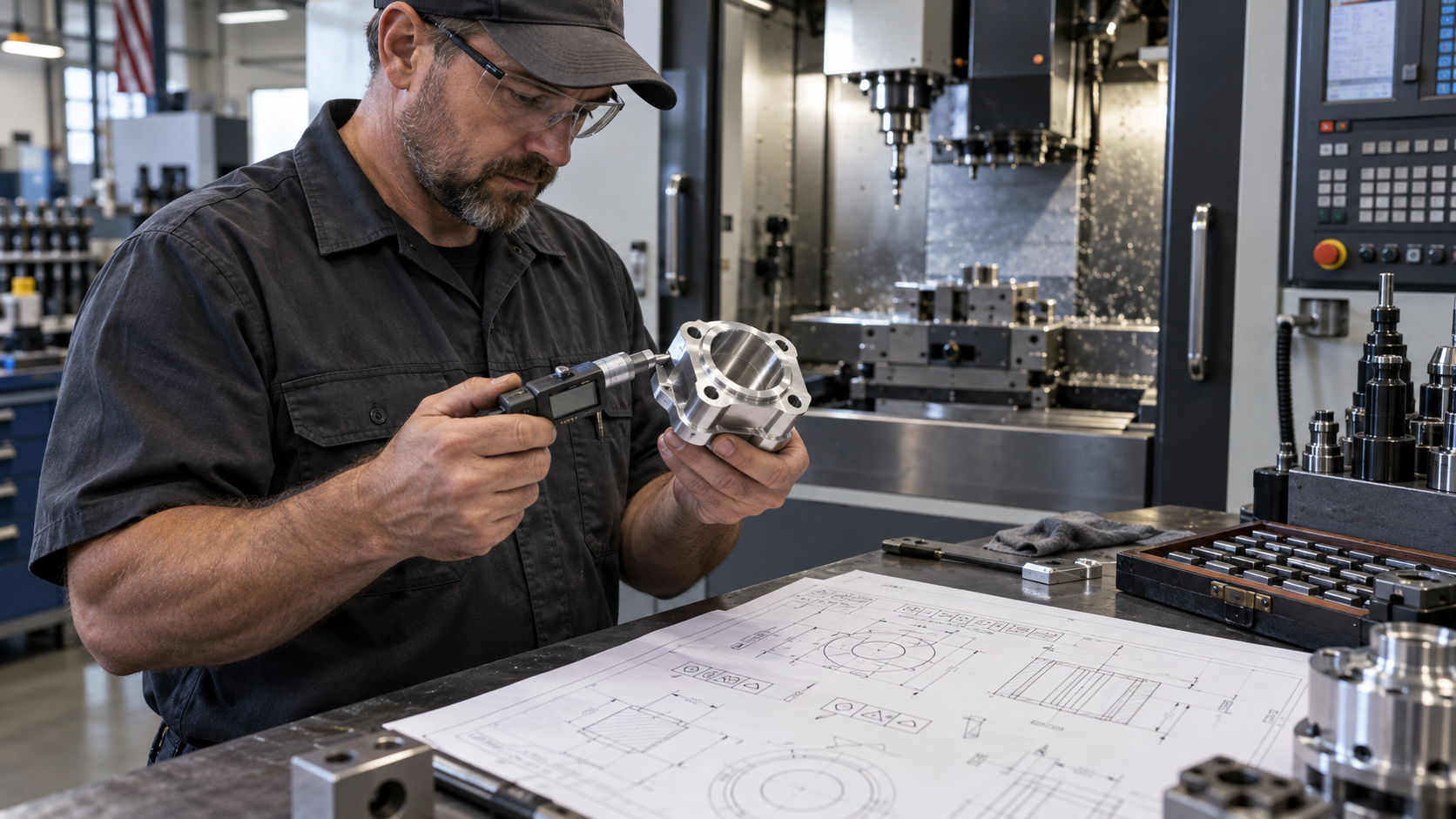
Geometric Dimensioning and Tolerancing (GD&T) is the symbolic language on engineering drawings that specifies how much variation a part can have and still function — flatness, true position, concentricity.
An operator who runs a program someone else wrote is valuable.
A machinist who can read a GD&T-heavy print, catch a tolerance problem before it becomes scrap, and speak to it in an interview reads as a different tier of hire to whoever’s screening resumes.
If you’ve never had formal GD&T training, it’s one of the fastest credentials to add real interview leverage, particularly for roles in aerospace, medical, and other tight-tolerance work where a misread print is expensive — and where this site’s specialty pages for quality inspector and CNC programmer roles specifically call it out.
CAD/CAM Software: Name It Specifically, Not Generically
Mastercam and Fusion 360 are the two platforms that show up most often in postings for programmer roles.
“CAM experience” on a resume or in an interview tells an employer nothing they can verify; naming the specific software — and being ready to speak to what you’ve actually built in it — is what gets you matched to postings that name it too.
Matching Credential to Specialty: A Quick Reference
If you’re targeting mill programmer or operator roles — NIMS Level II CNC Milling, plus Mastercam or Fusion 360 fluency.
If you’re targeting lathe programmer or Swiss-type roles — NIMS Level II CNC Turning, with GD&T literacy weighted heavily for tight-tolerance shops.
If you’re targeting tool and die or setup-operator roles — NIMS Level I as the foundation, plus hands-on GD&T since blueprint reading carries more weight than programming depth in these roles.
If you’re targeting quality inspector roles — GD&T is close to non-negotiable, often alongside CMM (coordinate measuring machine) experience, ahead of any machining-specific credential.
What This Costs and How to Get It Covered
NIMS testing typically runs a few hundred dollars for the written and performance components combined, varying by credentialing site.
Many community college machining programs, apprenticeships, and employers themselves will cover or reimburse testing tied to an open role — worth asking directly rather than assuming you’re paying out of pocket.
The Bottom Line
The credential that gets you hired fastest isn’t the most prestigious one — it’s the one that matches the specialty a shop is actually screening for.
Get the level right, name your software specifically, and treat GD&T as a real skill to demonstrate rather than a box to check.
Once you know which specialty and credential match your goals, browse open CNC machinist jobs filtered by that exact specialty.