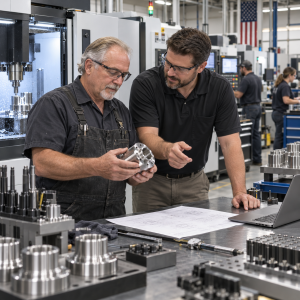
A resume listing the right machines and software is not the same thing as a machinist who can hold your tolerances today, on your equipment, reading your prints.
That gap is where bad hires come from — and in precision machining, a bad hire is one of the more expensive mistakes a shop can make.
What a Bad CNC Hire Actually Costs
Scrap and Rework
A part that’s out of tolerance doesn’t just cost the machining time — it costs the raw material, and on tight-tolerance work (aerospace, medical), a single scrapped part can represent real material and setup cost that’s difficult to recover.
Schedule Slippage
Job shops quote lead times against a fixed schedule.
A machinist who can’t hold pace or pass first-article inspection pushes the whole job, and that delay can carry contractual penalties or damage a customer relationship that took years to build.
Quality Escapes
In regulated industries, a part that leaves the shop out of spec isn’t just a rework cost — it’s a quality escape that can trigger a customer audit, a corrective action request, or worse, depending on where the part ends up.
Re-Hiring Costs on Top of Everything Else
Recruiting, onboarding, and training time spent on a hire who doesn’t work out has to be spent again on the replacement, while the seat stays empty and the backlog grows.
None of this shows up as a line item labeled “bad hire.”
It’s scattered across scrap reports, missed ship dates, and quality holds — which is exactly why it’s so often underestimated until someone totals it up.
Why a Resume and Certifications Alone Don’t Prevent This
A certification or a resume claim confirms someone learned or once performed a skill — not that they’ve maintained it, not that they can execute it on your specific machines and controls, and not that “5 years of CNC experience” means five years of the tolerance and complexity your shop actually runs.
None of that makes credentials worthless — they’re a legitimate floor — but a floor isn’t a guarantee.
How to Actually Screen for CNC Machining Skill
Test Blueprint and GD&T Reading Directly
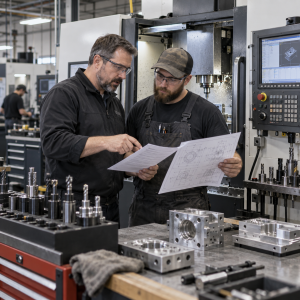
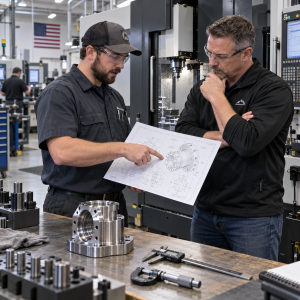
Hand candidates a real (or representative) print from your own work and have them walk through the tolerances and callouts out loud.
This surfaces gaps a resume never will — a machinist can run a machine well and still misread a GD&T callout that changes the whole job.
Run a Hands-On Machining or Programming Test Matched to the Actual Role
An operator test should reflect your real setups; a programmer test should reflect your real part complexity.
A generic test tells you less than a test built around your own work.
Candidates should also understand that practical evaluation may be part of the hiring process. Our candidate guide, CNC Machinist Interview: What to Expect and How to Prepare, explains the other side of that evaluation.
Verify Measurement Skill, Not Just Machining Skill
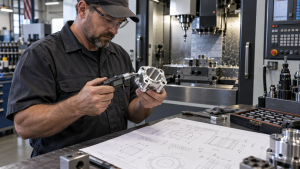
Have candidates measure a sample part with the same tools and to the same tolerance your floor actually uses.
This is where the gap between “can run a machine” and “can hold your spec” usually shows up first.
Weight Recent, Relevant Experience Over Total Years
A machinist with three recent years on your specific machine type and tolerance range is often a stronger bet than one with fifteen years spread across different equipment and looser tolerances.
Ask what they’ve run in the last 12 months specifically.
When recruiting CNC machinists, machine experience, tooling, blueprint knowledge, inspection ability, tolerances, and actual production experience all matter.
Standardize the Test Across Candidates
Same print, same part, same tolerance, every time — otherwise you’re comparing people evaluated under different conditions, which reintroduces the guesswork testing is meant to remove.
The Case for Testing Before Offer, Every Time
Some shops skip practical testing in a tight labor market to move faster, treating it as a bottleneck.
In practice, a focused test session — reading a print, measuring a part, and where relevant a hands-on machining component — is inexpensive insurance against scrap, missed ship dates, and re-hiring costs.
Shops that consistently avoid bad machinist hires are, without exception, the ones testing to their own work before extending an offer, not after a problem shows up on the floor.
The Bottom Line
The cheapest hire on paper is rarely the cheapest hire in practice.
A short, standardized skills test — built around your actual prints, tolerances, and machines — catches the gap between “qualified on paper” and “qualified for this job” before it costs you a schedule, a customer, or a quality escape.
If you’d rather have that screening done before a candidate reaches your desk, post your CNC opening with us and we’ll pre-screen and test candidates against your specific machines, tolerances, and print complexity.