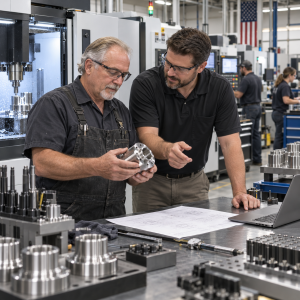
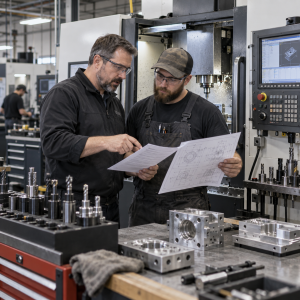
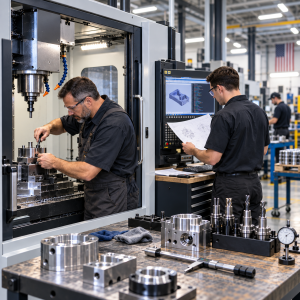
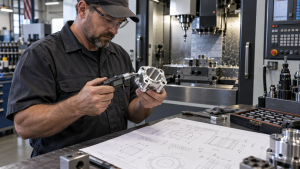
A CNC machinist interview rarely stays in the conference room.
Beyond most shops for roles past entry-level, expect to be asked to read a print, talk through G-code, or measure a part — sometimes in the same conversation as questions about your work history.
Knowing that going in is most of the preparation.
Why the Interview Includes Hands-On Questions
A resume tells an employer what machines and software you’ve listed.
A resume can’t tell them whether you can actually read an unfamiliar print under a little pressure, or whether “5 years of CNC experience” means five years of the complexity their shop runs.
Shops that ask practical questions in the interview — or follow it with a short hands-on evaluation — are trying to close that gap before making an offer, and it protects you too: passing means walking into the job already confident you can do the work.
Understanding whether you’re actually working as an operator, machinist, or programmer also matters before the interview. See CNC Machinist vs. Operator vs. Programmer: What the Titles Actually Mean for Your Pay.
What Typically Comes Up in a CNC Machinist Interview
Work History Questions That Probe for Specifics
Expect to be asked not just what machines you’ve run, but what tolerances, what materials, and what industry — aerospace, medical, automotive, general job shop.
Vague answers here are usually a bigger red flag to an interviewer than a skill gap, because they suggest the resume was generalized rather than accurate.
Be ready to speak specifically about your experience as a CNC machinist, operator, setup machinist, or programmer.
Blueprint and GD&T Questions
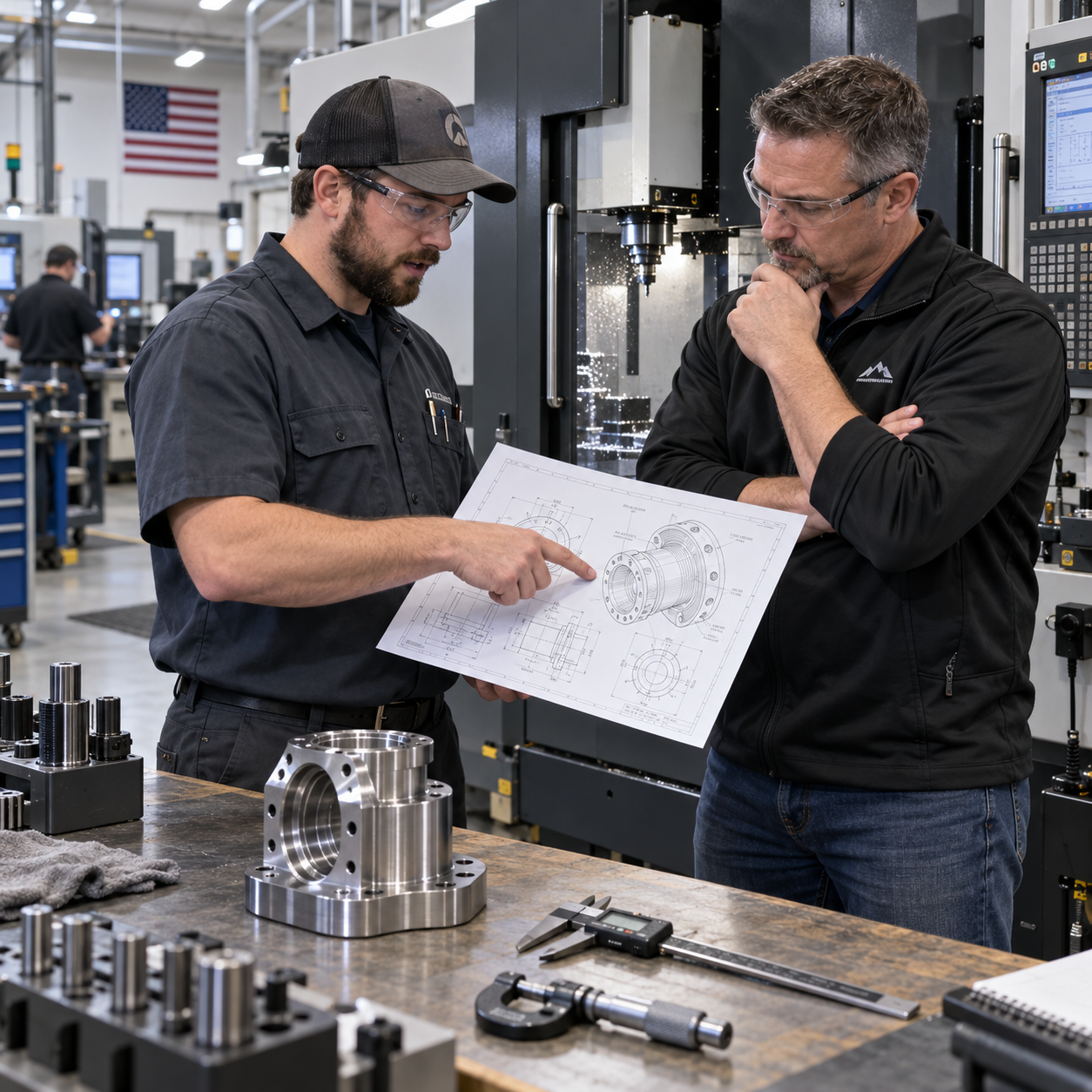
You may be shown a print and asked to identify a dimension, a tolerance, or a GD&T callout — flatness, true position, concentricity — and explain what it requires in practice.
This is one of the most common interview filters, because a machinist who can’t read the print accurately can’t hit the tolerance, no matter how good their machine skills are.
If GD&T or machining credentials are an area you want to strengthen before applying, review NIMS & GD&T Certifications: Which Ones CNC Shops Actually Pay For.
G-Code and Programming Questions
Even at shops running CAM software exclusively, expect questions about reading or troubleshooting G-code, since it’s what lets a machinist diagnose a problem at the control rather than guessing.
If you’re interviewing for a CNC programmer role specifically, expect this to go deeper — walking through how you’d approach programming a given feature.
Measurement and Precision Questions
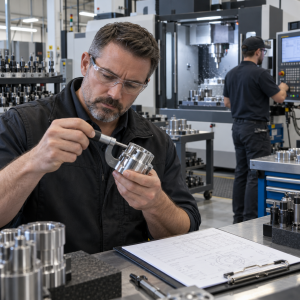
Expect to be asked which tool you’d use to check a given tolerance — caliper, micrometer, height gauge, or CMM — and why.
This tests judgment about appropriate tool selection, not just familiarity with the tools themselves.
A Hands-On Component for Many Roles Beyond Entry-Level
Setup and operation of an actual machine, or a written/practical measurement exercise, is common for programmer and setup-operator interviews specifically, less universal for straight operator roles.
How to Prepare for a CNC Machinist Interview
Practice Explaining Your Reasoning Out Loud, Not Just Doing the Work
In an interview, being right isn’t enough — you need to narrate why.
Practice talking through a print or a tolerance decision as if explaining it to someone, not just solving it silently.
Refresh Manual G-Code Reading Even If You Mainly Use CAM Software
Interviewers often ask about it specifically because it’s the skill CAM-only machinists let atrophy, and being able to speak to it signals depth.
Prepare Specific, Quantified Examples From Your Work History
“I held tolerances to plus or minus .0005 inches on aerospace components” answers the question an interviewer is actually trying to get at better than “I have precision experience.”
Ask What Tolerance Standard or Industry the Role Involves
If it isn’t already clear, ask.
A shop running loose-tolerance general fabrication and one running tight-tolerance medical components are listening for different things.
If a Hands-On Component Is Likely, Treat Setup With the Same Care as the Interview Conversation
Fixturing and offset errors account for a large share of practical evaluation misses, separate from actual machining skill.
What a Rough Answer or Failed Practical Actually Tells You
A shaky answer to a blueprint question or a missed practical evaluation doesn’t necessarily mean you’re not a qualified machinist.
It often points to something specific and fixable: an unfamiliar GD&T callout, rusty manual programming, or nerves under time pressure.
If it’s offered, ask what specifically didn’t land; that’s exactly what to drill before the next interview.
The Bottom Line
A CNC machinist interview is testing whether you can do the specific work a shop needs, not just talk convincingly about experience in general.
Walk in ready to read an unfamiliar print out loud, explain your tolerance reasoning, and speak specifically about what you’ve actually run — and the hands-on parts of the interview become a chance to demonstrate exactly what a resume can’t.
Looking for roles that match the machines, software, and tolerance work you actually interview well on?
Search current CNC machinist jobs by specialty and equipment experience.